 Image 1 of 6
 Image 2 of 6
 Image 3 of 6
 Image 4 of 6
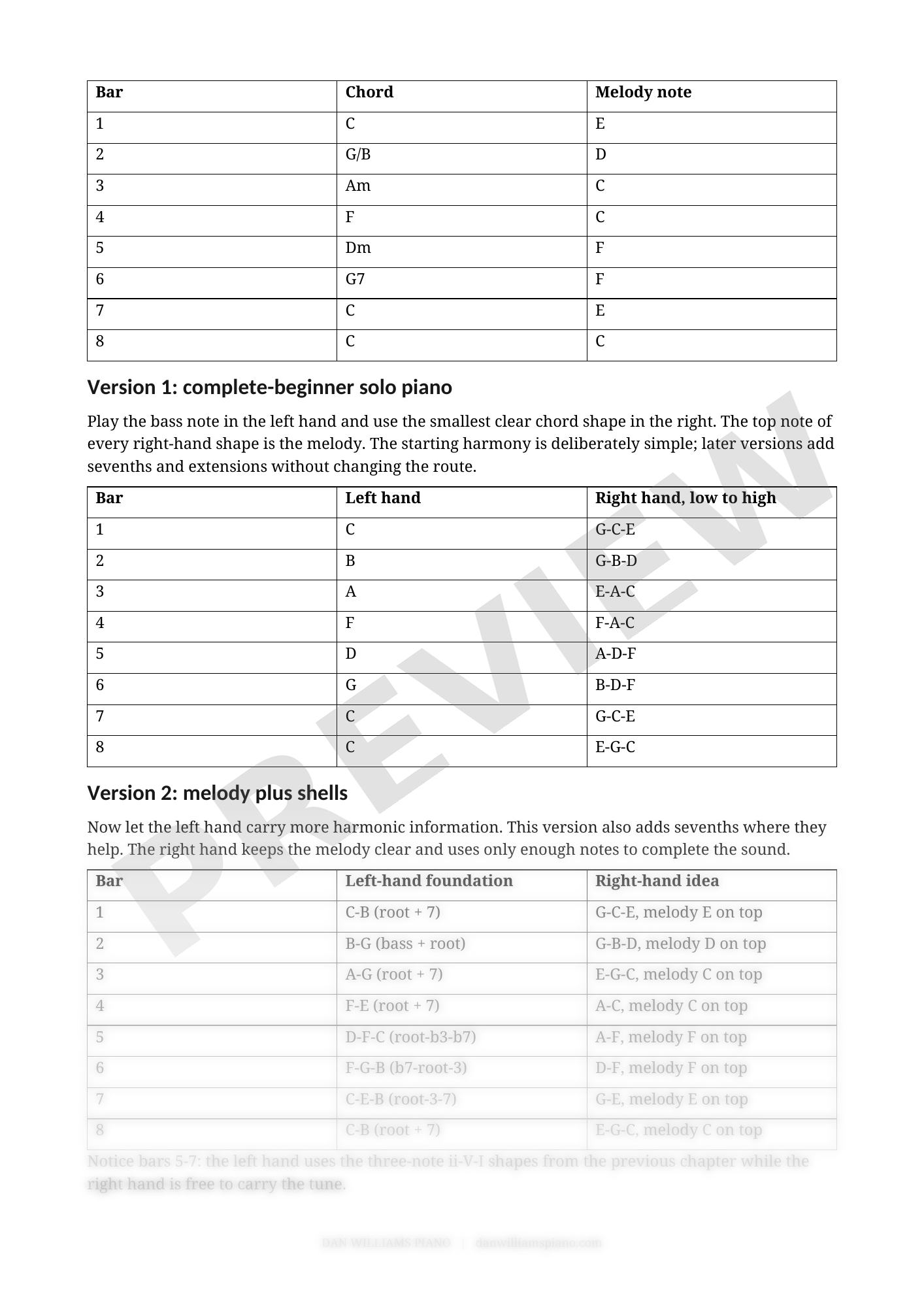 Image 5 of 6
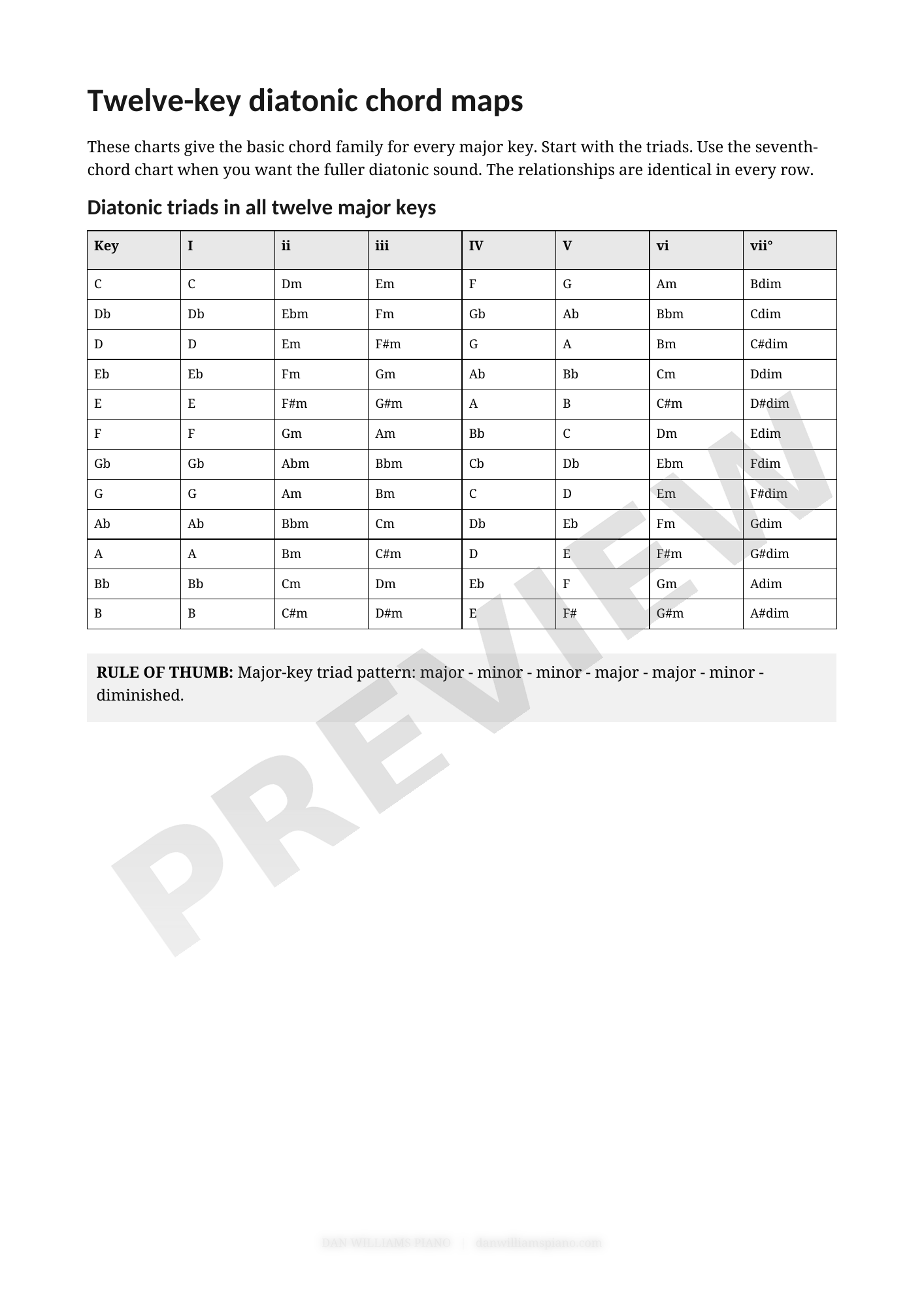 Image 6 of 6
Stop memorising isolated chords. Start understanding how they fit together.
Piano harmony becomes much easier once you understand the relationships underneath the notes. The Practical Piano Harmony System shows you what chords are doing, how to move between them, and how to turn that understanding into something you can actually play.
Understand
Learn why chords work, how they relate to the key and where they naturally want to move.
Play
Use inversions, voicings, bass movement and practical fingering instead of relying on one fixed chord shape.
Create
Apply the same ideas to accompaniment, playing by ear, songwriting, arranging and reharmonisation.
From your first chords to richer harmony.
Complete beginners can start with the Quick Start. More experienced players can move straight into the main harmony system.
Not just what the chord is. What your hands can actually play.
Knowing that a chord is Cmaj7 is useful. Knowing several practical ways to play it, connect it to the next chord and alter its colour is much more useful.
The handbook shows you how to choose between roots, inversions, shells, compact voicings, altered bass notes and extensions depending on what the music needs.
For players who want to understand what they are playing.
Frequently asked questions
Is it suitable for a complete beginner?
Do I need to read sheet music?
Does it teach chord inversions and voicings?
Does it cover ii–V–I progressions?
Does it include all 12 keys?
Can I use it for songwriting and composition?
What format is the handbook?
Dan Williams
Dan Williams is a professional pianist and piano teacher and a Leeds Conservatoire graduate.
He teaches at Yorkshire Music School, The Music Bank and privately, with a particular focus on harmony, chords, improvisation, playing by ear and practical piano playing.
The Practical Piano Harmony System brings those ideas together into one concise reference designed to be used at the piano.
Understand the harmony. Then make it your own.
A concise practical system for chords, voicings, progressions, playing by ear, arranging, songwriting and reharmonisation.
52-page PDF. One-time purchase. Instant digital download.
Get the handbook